Descrizione
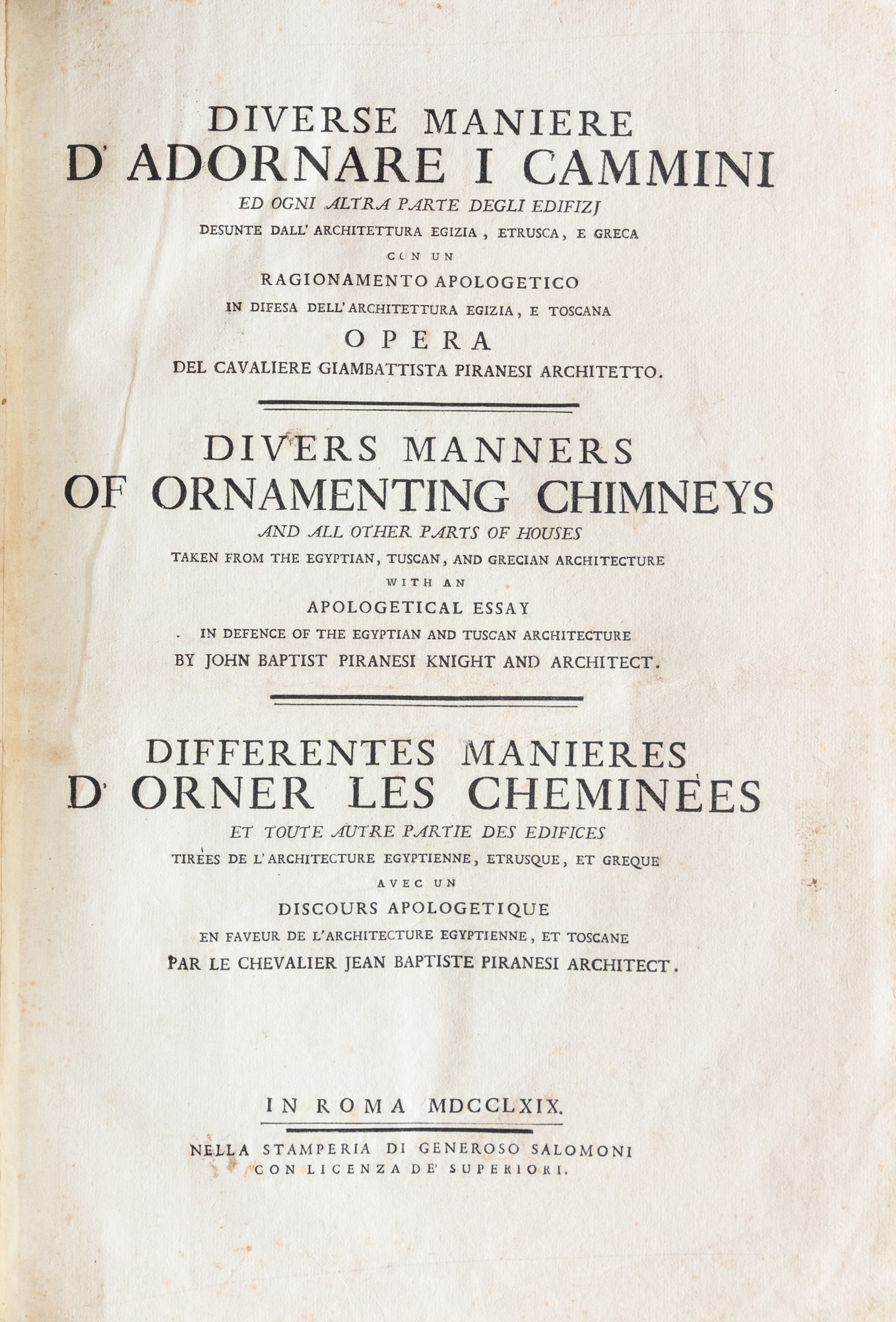
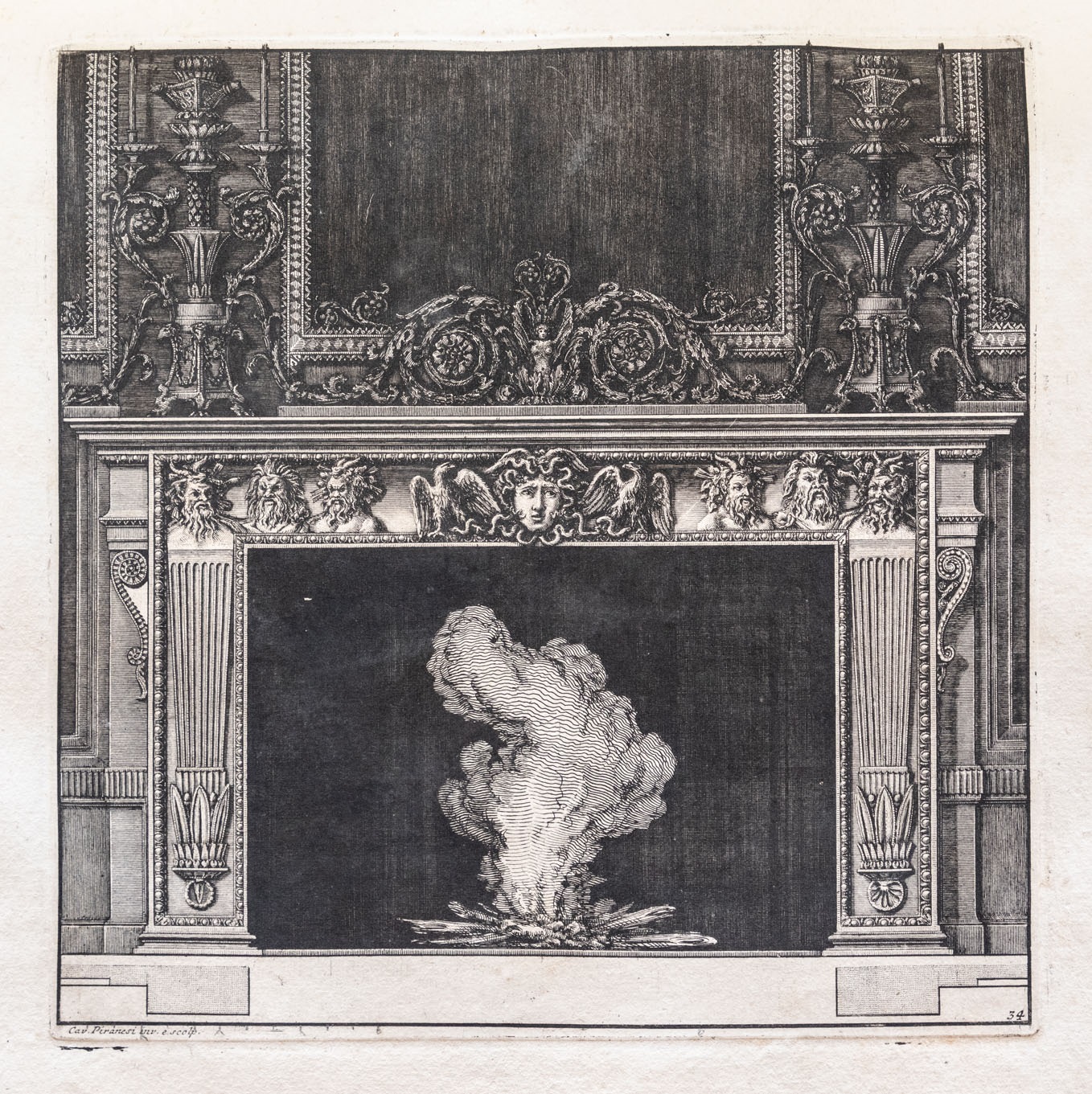
PIRANESI, GIOVANNI BATTISTA – Diverse maniere d’adornare i cammini ed ogni altra parte degli edifizi desunte dall’architettura Egizia, Etrusca, Greca con un ragionamento apologetico in difesa dell’architettura egizia, e toscana (title repeated in English and French).
Rome, Generoso Salomoni, 1769.
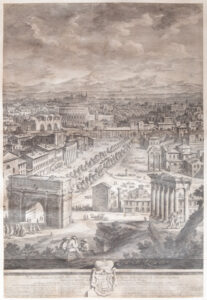
Atlantic folio (510×340 mm.), mid-19th cent. half vellum, with corners, title and fillets in black at spine, internally clean and in good condition, with plates in bright impression. Double-page (here folding) engraved frontispiece (dedicated to Pope Clemens XIII Rezzonico, the great sponsor of Piranesi), pp. (4), 1-21, (2), 35, (1, imprimatur) of text in Italian, English and French with an engraved heading, and an engr. tailpiece; 3 nn. engr. plates interposed in the text, 1 nn. plate with at verso author’s advice to reader, and 66 engraved plates (with some errors in numbering). Complete.
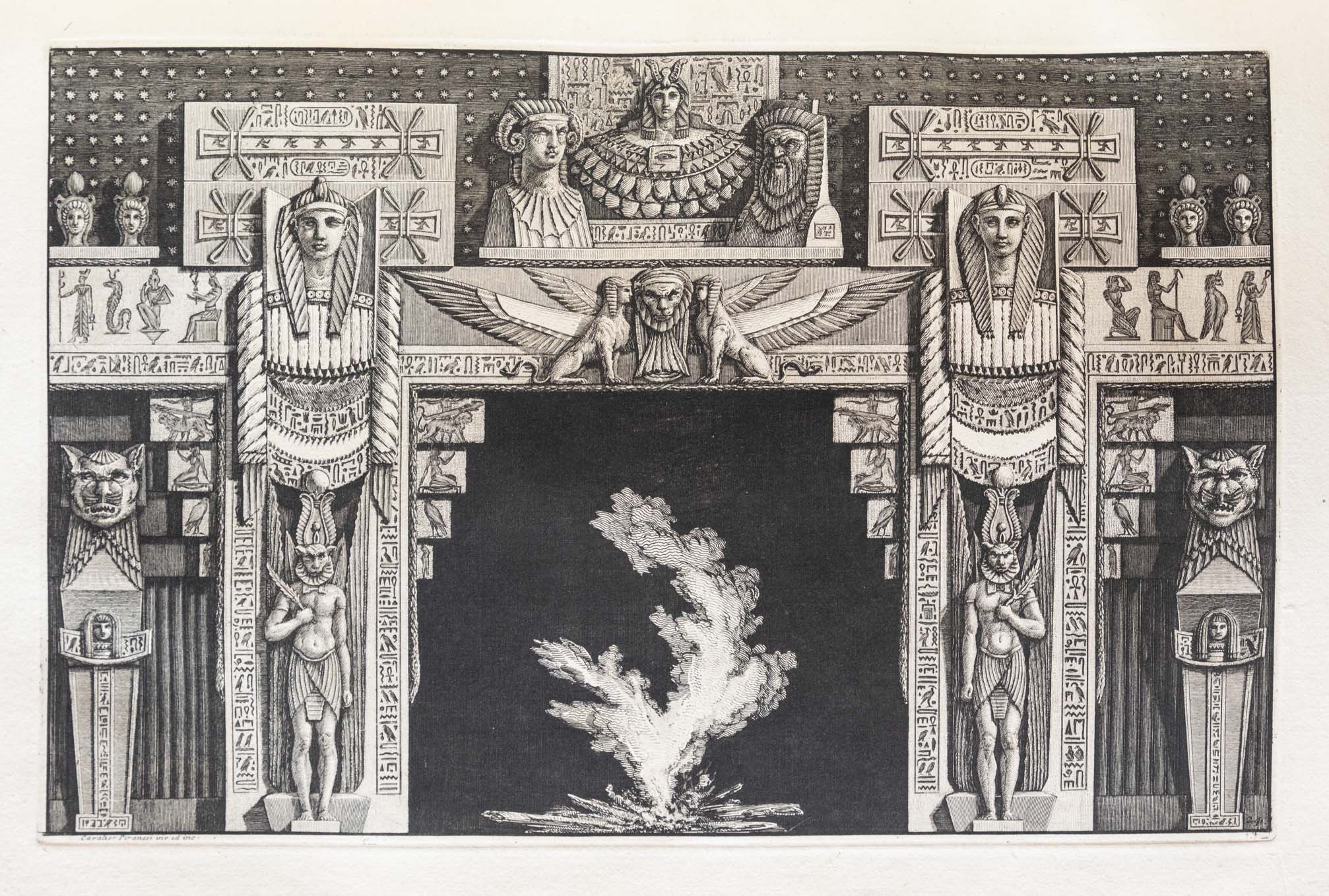
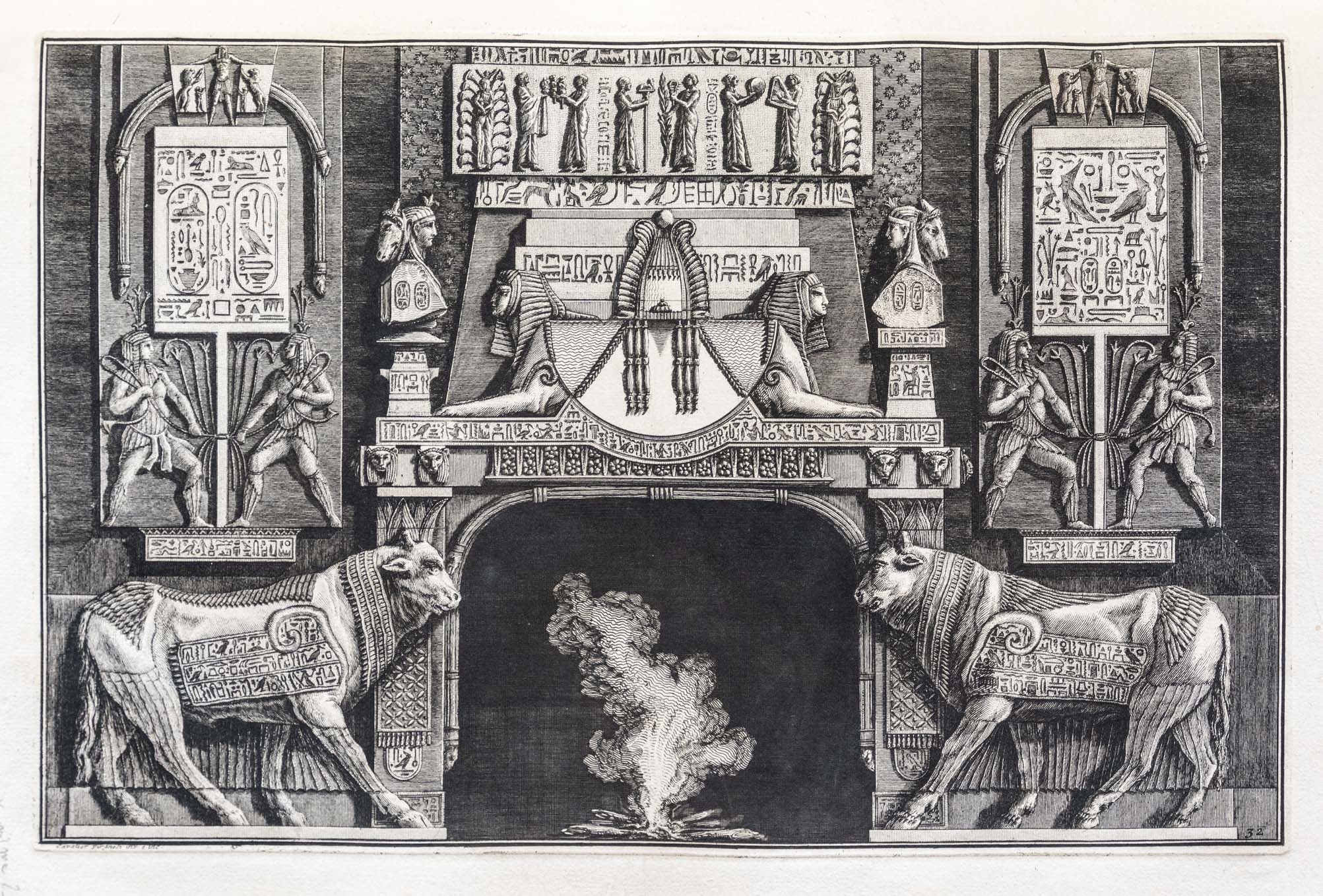
First edition of Piranesi’s celebrated suite of designs for chimney pieces and other décor in an imaginative classical-inspired style. English collector and antiquarian William Hamilton, in a letter to Piranesi, wrote that “I am delighted you have done this work for it will be very useful in my country where we make much use of fireplaces … I admire the way you have arranged them, and only you are capable of giving the engraving such a strength and so much character.” Sometimes treated as a simple if virtuosic pattern book, the text and images alike of Piranesi’s Diverse maniere also “craft a history of ancient art … [by which he] injects himself into one of the key scholarly debates of the 1750s and ’60s: how to create a system for classifying architecture and art created by ancient cultures” (Heather H. Minor, “G.B. Piranesi’s ‘Diverse Maniere’ and the Natural History of Ancient Art”, in Memoirs of the American Academy at Rome 56/57, 2011-12). While Piranesi is rightly famed for his brilliant and imaginative work as an artist and engraver, he was also a serious antiquary and archaeologist, exploring not only an interest in the history of ancient ruins, but all the ways we might take their lessons into the future with us. His work “manifests the tension between the closed actuality of material fact and the endlessly open possibilities tradition offers to invention” (S. Stewart, The Ruins Lesson, 2020).
In Notice historique sur la vie et les ouvrages de J.B. Piranèse, Jacques-Guillaume Legrand ( 1753 – 1807), reports that the activity of G.B. Piranesi as decorator and interior designer dates back to the beginning of his activity, before 1740, when he was still in Venice dealing with the modernization of some palaces owned by Venetian senators and nobles. Even between August 1745 and September 1747, returned again to Venice after the first and brief stay in Rome, he still deals with decoration next to the sculptor Giovanni Maria Morlaiter (1699 -1781) and perhaps the same Giovanni Battista Tiepolo (1696 – 1770). But it is only in Rome that Piranesi’s inspiration finds the ideal setting for his bizarre and personal elaborations. From the fifties of the eighteenth century, in Rome, the taste for the ancient ruines and the picturesque became widespread, we can find a perfect example of this in the Room of the Ruins at the Convent of Trinità dei Monti of Charles-Louise Clérisseau (1721 – 1820). In this context, Piranesi designs and engraves original solutions that are inspired not only by Roman architecture, but also by Egyptian and Etruscan creativity. The compositions exalted the variety of combination of eclectic elements, in a creative momentum that sometimes seems to hide an irreverent irony. Piranesi publishes Delle diverse maniere d’adornare i cammini […] in 1769, but loose plates of this work had been circulating for some years, as well as many of the engraved tables reproduced furniture and decorations already made for its rich and powerful patrons.
Piranesi in fact decorated the apartments of Monsignor Giovanni Battista Rezzonico, nephew of Pope Clemente XIII, at the Quirinale and Castel Gandolfo (1767) and the one in the Capitol of Senator Abbondio Rezzonico (1768-69); for the Cardinal Rezzonico, in particular, he drew and had realized a pair of tables like the one depicted at plate 60 of Diverse maniere. The tables, now held at the Minneapolis Institute of Art and at the Rijksmuseum in Amsterdam, are among the very few surviving pieces of furniture from Piranesi.
Between 1765 and 1767, Piranesi made other works of decoration for the rooms of the Caffè degli Inglesi at Piazza di Spagna always depicted in the Diverse maniere at plate 45 and 46. He also designed some furniture for the marquise Margherita Gentili Sparapani Boccapaduli (1735-1820), illustrated in the famous painting by Laurent Pécheux (1729-1821) dated in Rome in 1777 and he was in charge of the decoration works for the apartments of the Ambassador of Malta, the Balì de Breteuil. Among the chimneys depicted in the work published in 1769, we can recognize the one made for the Count of Exeter and meant for Burghley House where it is still preserved (plate 1) and the chimney that ” is seen in Holland in the cabinet of knight John Hope”, today at the Rijksmuseum (plate 2).
The engrevings of the Diverse maniere represent one of the summits of the artist’s most free inventiveness, destined to exert for decades a profound influence on the European neoclassical taste. He certainly influenced his friend and colleague Robert Adam, as well as the visionary creations of Thomas Hope. Piranesi was deeply linked to the rebirth of the ancient world, but his neoclassicism is so personal and sometimes irreverent as to justify the term coined for him by Henri Focillon of “Piranesi style”.
(Alvar Gonzales-Palacios, 2010, and DBI, Vol. 84, 2015 Treccani ed. Rome) BAL RIBA 2556; Millard Italian 100; Hind p. 86.